Barapullah phase 3 will be ready by June 30, says Verma after inspection of the project
Delhi’s PWD Minister Parvesh Verma on Tuesday reviewed work at the Barapullah Phase- 3, one of the key road infrastructure projects in the city.
He announced that two-wheelers, three-wheelers, and slow-moving vehicles will not be allowed on its main carriageway as their entry could lead to serious accidents.




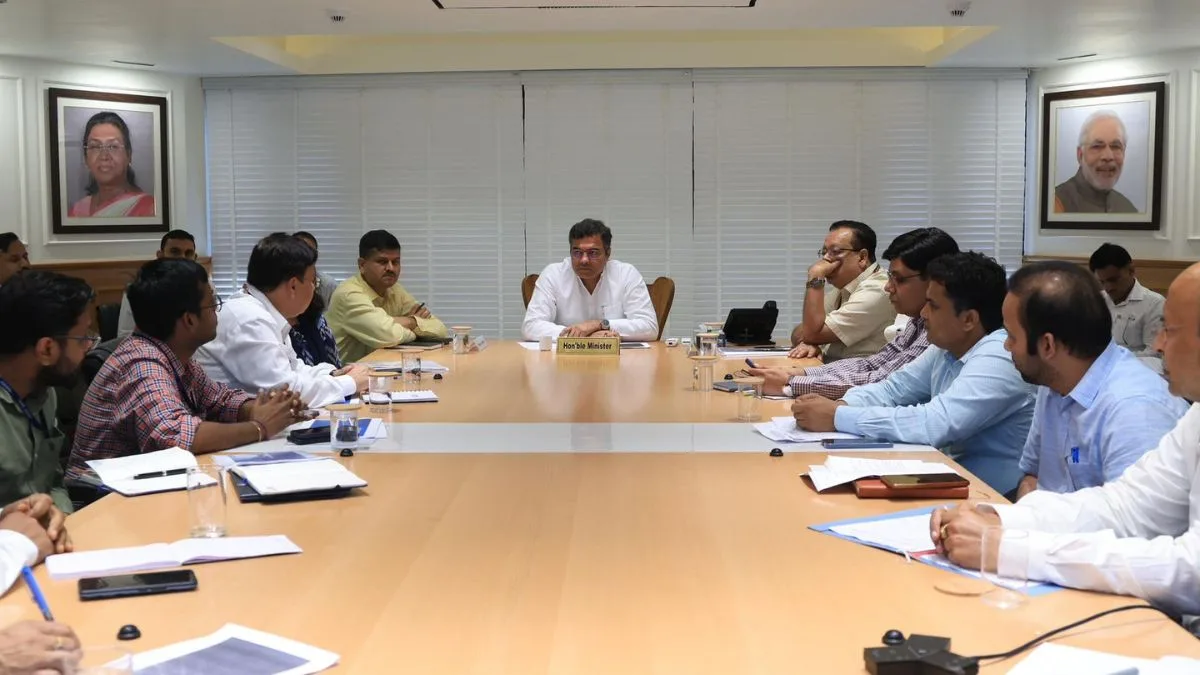
Photo: SNS
Delhi Minister Parvesh Verma on Thursday chaired a meeting of the Union Territory (UT) level coordination committee to review infrastructure projects in the national capital, and importantly the safety issues related to newly inaugurated Urban Extension Road- II (UER-II).
He announced that two-wheelers, three-wheelers, and slow-moving vehicles will not be allowed on its main carriageway as their entry could lead to serious accidents.
Advertisement
He directed the Delhi Traffic Police to enforce this restriction strictly and to ensure proper awareness through signages, public announcements, and awareness drives.
Advertisement
Additionally, Verma instructed that surveillance cameras, adequate manpower, and patrolling vans be deployed across the new corridor, while ambulances should also be stationed at regular intervals to guarantee a swift emergency response system in case of any urgent situation.
Verma stressed that service roads should be constructed immediately by the National Highways Authority of India so that people living in nearby areas can have smooth and safe access towards UER-II.
According to the minister, this would not only improve local connectivity but also ensure better traffic management on the corridor.
He said, “UER-II is not just another road; it is a high-speed lifeline for Delhi. We are committed to ensuring that commuters get world-class infrastructure without compromising safety.”
The minister added, “Restrictions on unsafe vehicle movements will be strictly enforced, and surveillance and emergency response systems will remain active round the clock.”
Verma also noted that the Delhi Jal Board has completed shifting of the water pipeline at Village Nangli Sakrawati, resolving a critical component of the project.
Verma also reviewed key infrastructure challenges with regard to the national capital, and also held discussions on how to accelerate the pace of ongoing projects under the NHAI in Delhi.
Notably, to prevent flooding during monsoons, the Minister directed the concerned departments to put in place a robust drainage system in vulnerable areas such as Karala–Kanjhawala Road, Mundka–Karala Road, and near Village Barwala.
He emphasised that the drainage plan must be one that stays as a permanent solution, not temporary, to avoid repeated water-logging issues.
Addressing the power requirements of Package 5 of UER-II, the Minister instructed power discom to fast-track the installation of transformers while directing NHAI to coordinate with the India International Convention Centre (IICC) for smooth execution.
The important meeting of the committee was attended by senior officials from NHAI, Delhi Traffic Police, PWD, BSES, Delhi Jal Board, Environment Department, MCD, Revenue Department, and Power Department.
The Minister reiterated that seamless coordination between departments is the most crucial aspect for delivering projects on time, and to the highest standards.
Advertisement